
Watch the Full Video
Get a clear, step-by-step explanation of this condition, including what symptoms matter and when to seek care.
Pediatric Ear Infection: Symptoms, Evaluation, and When to Seek Care
Learn what causes middle-ear infections in children, which symptoms to watch for, what to expect during evaluation, and when a child needs urgent or emergency care.
Understanding the Condition
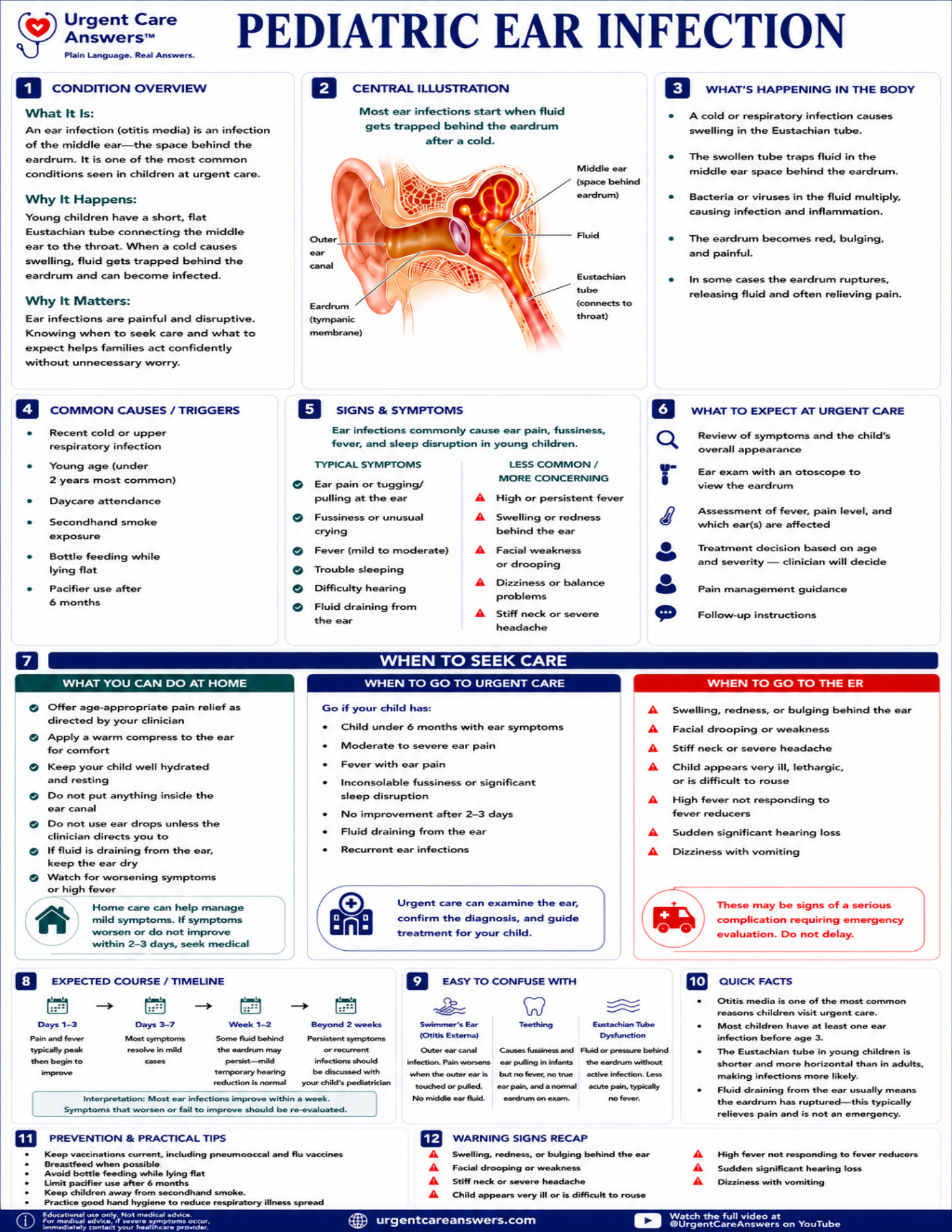
The handout above provides a quick overview. If you'd like a little more detail, the sections below explain what the condition is, what symptoms to expect, how it's usually treated, and when to seek medical care.
Undertanding What It Is
A pediatric ear infection, or acute otitis media, affects the middle ear behind the eardrum. It often develops after a cold when swelling blocks normal drainage and fluid collects behind the eardrum. That trapped fluid can become inflamed or infected, causing pressure and pain.
Undertanding Symptoms
Common symptoms include ear pain, tugging at an ear, irritability, poor sleep, reduced appetite, and sometimes fever. Temporary muffled hearing can occur when fluid is trapped behind the eardrum. Younger children may simply seem unusually fussy because they cannot describe the pain.
Undertanding Treatment & Recovery
Treatment depends on the child's age, symptoms, exam findings, and how severe the infection appears. Urgent care can examine the eardrum and decide whether observation or treatment is appropriate. Many uncomplicated ear infections begin improving within a few days, although trapped fluid may last longer.
Undertanding When To Seek Care
Seek medical evaluation for significant or persistent ear pain, fever with ear symptoms, ear drainage, poor fluid intake, or symptoms that are not improving as expected. Emergency care is appropriate for serious warning signs such as severe dehydration, difficulty waking, confusion, seizure, stiff neck, or breathing difficulty.